

Some professional journeys are shaped by ambition and speed, while others unfold through discipline, patience, and responsibility. A rare few develop quietly within systems so vast and complex that leadership itself becomes a careful exercise in balance, restraint, and long-term judgment. Oliver Blume’s journey belongs firmly to this rare category.
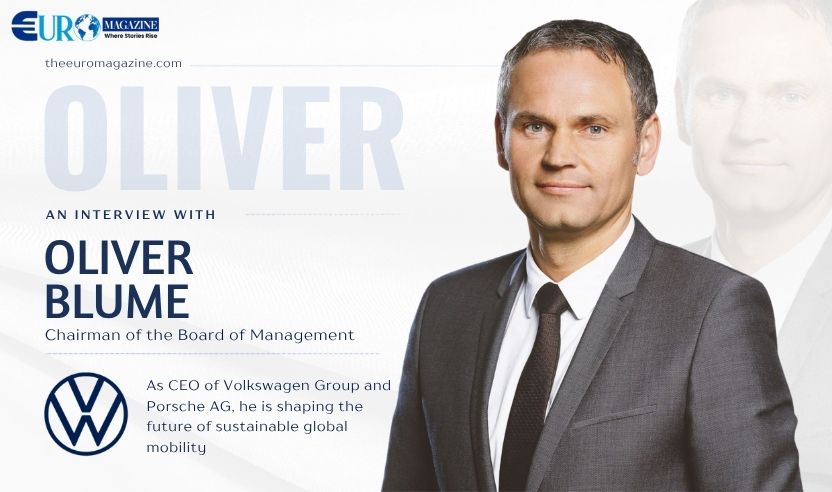
His career is not defined by dramatic reinvention or headline-driven disruption, but by a steady progression through Europe’s most influential industrial institutions. Rooted in engineering precision and guided by governance, operational discipline, and long-term value creation, Blume’s leadership represents a distinctly European approach to business stewardship. As Chief Executive Officer of Volkswagen Group and Porsche AG, he stands at the intersection of legacy and transformation, entrusted with guiding global automotive institutions through one of the most consequential transitions in modern industrial history.
Early Foundations: Engineering as a Way of Thinking, Not Just a Profession
Growing Up Within Germany’s Industrial Culture
Born in Braunschweig, Germany, Oliver Blume grew up surrounded by a culture that deeply values structure, reliability, and technical excellence. Germany’s post-war industrial legacy shaped entire generations to respect process, accountability, and craftsmanship. Within this environment, Blume developed an early appreciation for how complex systems function and how precision influences outcomes.
Unlike narratives driven by early entrepreneurial experimentation, Blume’s formative years were shaped by observation and understanding. He was drawn to how things worked rather than how quickly they could be changed. This early mindset would later distinguish his leadership approach, especially in industries where safety, regulation, and scale leave little room for improvisation.
Academic Discipline and Engineering Rigor
Blume pursued mechanical engineering at the Technical University of Braunschweig, an academic path known for its intellectual rigor and demanding standards. Engineering education is not forgiving of shortcuts. It requires methodical thinking, patience, and the ability to evaluate long-term consequences.
During his academic years, Blume developed a structured approach to problem-solving that would later define his professional identity. Engineering taught him that systems are interconnected, that decisions ripple across processes, and that responsibility does not end at design but extends into execution, safety, and sustainability.
Rather than treating engineering as a purely technical skill set, Blume internalized it as a philosophy. This philosophy would later inform how he approached leadership, governance, and transformation.
Entering Volkswagen Group: Choosing Depth Over Speed
Committing to One of Europe’s Largest Industrial Ecosystems
Oliver Blume joined the Volkswagen Group in the mid-1990s, entering one of the most complex industrial organizations in Europe. At a time when career mobility was becoming increasingly valued, Blume made a deliberate choice to grow within a single ecosystem.
This decision reflected a belief that leadership credibility is built through deep institutional understanding. Rather than pursuing rapid advancement, he focused on learning how the organization functioned at its core, particularly within production and logistics.
Learning from the Factory Floor to Strategic Planning
His early responsibilities involved production planning, logistics coordination, and operational optimization. These roles placed him close to the realities of manufacturing, where theoretical strategy meets physical execution. He worked alongside engineers, plant managers, suppliers, and planners, gaining insight into how decisions translate into outcomes on the factory floor.
This exposure shaped Blume’s respect for operational expertise. He learned that successful leadership must account for human systems, technical constraints, and economic realities simultaneously. Over time, his ability to navigate complexity with discipline earned him trust within the organization.
Rising Through Responsibility: Building a Reputation for Reliability
From Specialist Roles to Broader Leadership
As Blume progressed within Volkswagen Group, his responsibilities expanded beyond technical execution into broader management roles. His career advancement was marked not by visibility but by reliability. He became known as someone who delivered results consistently, without drama, and with respect for process.
This reputation positioned him for senior leadership roles, particularly in environments where precision and accountability were non-negotiable. His ability to bridge engineering depth with managerial clarity made him a natural fit for premium automotive leadership.
Porsche AG: Protecting Heritage While Preparing for the Future
Joining the Board of Management
In 2013, Oliver Blume was appointed to the Board of Management of Porsche AG, responsible for Production and Logistics. Porsche occupies a unique position in the automotive world. It represents not only performance and luxury, but a deeply embedded culture of craftsmanship and engineering excellence.
Blume approached this role with humility toward the brand’s heritage. He understood that innovation at Porsche could never be pursued at the expense of identity. His focus was on modernizing production processes, improving efficiency, and enhancing flexibility, while ensuring that quality and performance standards remained uncompromised.
CEO of Porsche AG: Leading Through Industry Transition
In 2015, Blume was appointed Chairman of the Executive Board of Porsche AG. His leadership coincided with a period when the automotive industry was entering a transformative phase. Electrification, emissions regulation, and sustainability pressures were reshaping strategic priorities across the sector.
Blume guided Porsche through this transition with deliberate clarity. Rather than reacting to trends, he pursued a structured electrification strategy that respected the brand’s performance DNA. The launch of the Taycan symbolized this balance, demonstrating that electric mobility could align with Porsche’s identity.
Under his leadership, Porsche maintained strong financial performance while investing in long-term innovation. This balance reinforced Blume’s standing as a leader capable of navigating change without sacrificing stability.
Volkswagen Group: Leadership at Unprecedented Scale
Appointment as CEO During Industry Disruption
In 2022, Oliver Blume was appointed Chief Executive Officer of Volkswagen Group, while continuing his role as CEO of Porsche AG. This dual responsibility placed him at the helm of one of the world’s largest automotive groups, encompassing multiple brands, global operations, and hundreds of thousands of employees.
His appointment came at a time of extraordinary challenge. The automotive industry faced accelerating electrification, software transformation, geopolitical uncertainty, supply chain disruptions, and heightened sustainability expectations.
Restoring Strategic Focus and Organizational Discipline
Blume approached this role with a clear emphasis on focus and governance. He prioritized strengthening decision-making structures, improving capital allocation discipline, and aligning the group’s long-term investments with realistic execution capabilities.
Rather than promoting sweeping narratives, Blume emphasized fundamentals. Battery technology, software platforms, digital infrastructure, and manufacturing efficiency became central to Volkswagen Group’s strategic direction. At the same time, he addressed organizational complexity, recognizing that transformation at scale requires clarity and coordination.
Leadership Philosophy: Engineering-Led Stewardship
Calm Leadership in High-Stakes Environments
Oliver Blume’s leadership style is characterized by composure and restraint. In an era where executive visibility often overshadows substance, Blume represents a quieter form of authority. He values structured decision-making, accountability, and long-term consistency over short-term recognition.
Despite the scale of his responsibilities, he remains closely connected to engineering principles and operational realities. This grounding allows him to assess risk realistically and pursue transformation responsibly.
A European Model of Responsible Capitalism
Blume’s journey reflects a European leadership tradition that values institutional continuity, regulatory responsibility, and social accountability. His influence extends beyond corporate outcomes, contributing to broader conversations on sustainable mobility, industrial resilience, and Europe’s competitive position globally.
The Road Ahead: A Journey Still Being Written
Redefining Legacy Without Erasing Identity
Today, Oliver Blume stands among Europe’s most influential business leaders, guiding legacy automotive institutions through historic transformation. His journey illustrates that leadership at scale is not about reinvention for its own sake, but about stewardship, preserving what works while preparing for what must evolve.
In a business world often driven by speed and disruption, Blume’s story offers a different narrative. It is a story of engineering-led leadership, responsibility, and the quiet strength required to guide complex organizations toward a sustainable future.
Conclusion: Leadership Rooted in Substance
Oliver Blume’s journey is not a tale of sudden ascent or dramatic disruption. It is the story of a leader shaped by discipline, engineering rigor, and long-term responsibility. Through decades within Europe’s most influential automotive institutions, he has demonstrated that sustainable leadership is built on depth, patience, and trust.
As the automotive industry continues to evolve, Blume’s approach serves as a reminder that true transformation requires more than vision. It requires structure, accountability, and the courage to think long-term in a world increasingly focused on the immediate.
Read More Articles:-