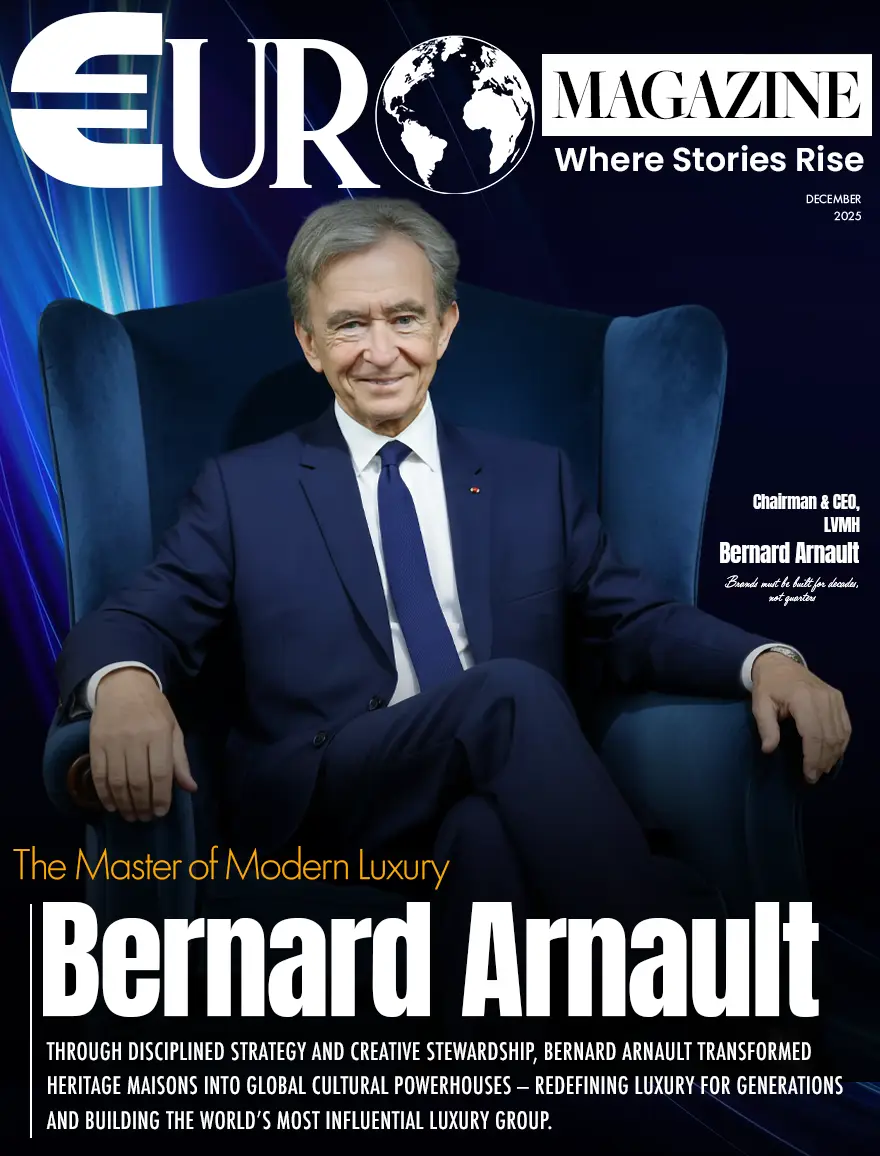

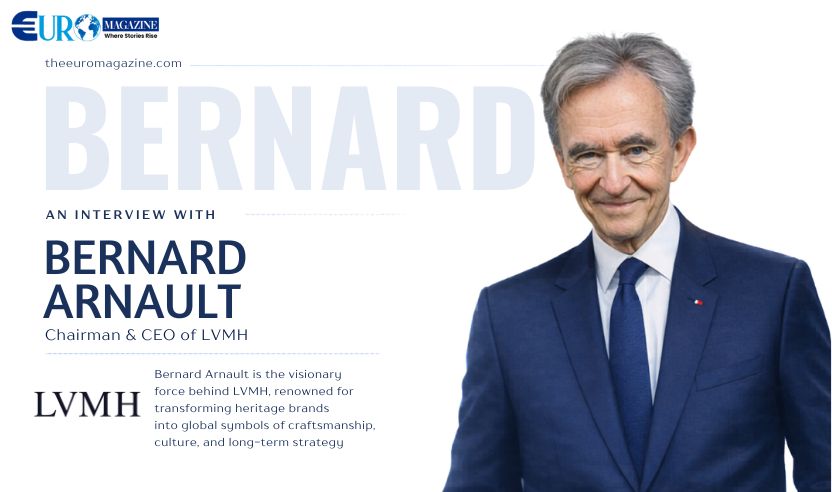
Some leaders build companies. Others build industries. Bernard Arnault belongs to the rare class of visionaries who reshaped how the world understands luxury, brand value, and long-term business strategy. As the Chairman and CEO of LVMH Moët Hennessy Louis Vuitton, Arnault has spent decades transforming heritage brands into global cultural symbols, turning craftsmanship into a strategic advantage, and redefining luxury for generations of consumers across continents.
From his early exposure to engineering and business discipline to leading the world’s largest luxury conglomerate, Arnault’s journey reflects calculated risk-taking, relentless focus on excellence, and a deep understanding of the emotional power of brands. Today, LVMH stands not just as a business empire, but as a benchmark for how creativity, heritage, and commercial success can coexist at scale.
This journey explores the milestones, philosophy, and leadership principles that shaped Bernard Arnault’s rise, and the enduring legacy he continues to build.
Early Life and Foundations of Discipline
I was born in Roubaix, France, in 1949, into a family deeply rooted in business and industry. My father owned a civil engineering company, and from a young age, I was exposed to the realities of entrepreneurship, responsibility, decision-making, and the importance of long-term thinking. Watching a business operate from the inside taught me that success is never accidental; it is built through discipline, structure, and persistence.
My academic path led me to École Polytechnique, one of France’s most prestigious engineering institutions. The training I received there shaped my analytical mindset and reinforced my belief in precision, logic, and problem-solving. Engineering taught me how to break complex systems into manageable parts, a skill that later proved invaluable in managing multi-brand global enterprises.
After completing my education, I joined my family’s business, where I gradually took on greater responsibilities. These early years were not glamorous, but they were formative. They instilled in me a respect for operational rigor, financial discipline, and strategic planning, principles that would later define my leadership style.
A Strategic Shift That Changed Everything
The true turning point in my career came in the early 1980s, when I made the decision to step beyond construction and real estate into an entirely different world, luxury fashion and heritage brands. This shift was not driven by trend or emotion, but by a clear strategic insight: strong brands, when managed correctly, could generate enduring value far beyond traditional industries.
The acquisition of Boussac Saint-Frères, a struggling textile group that owned Christian Dior, marked my formal entry into the luxury sector. While many saw risk in reviving a declining company, I saw potential, not only in Dior itself, but in the broader ecosystem of luxury brands built on craftsmanship, history, and identity.
That experience shaped my conviction that luxury is not about volume or speed. It is about scarcity, narrative, quality, and emotional connection. This understanding would soon become the cornerstone of everything I built next.
The Creation and Rise of LVMH
In 1987, the merger of Louis Vuitton and Moët Hennessy created what would become LVMH, a group designed to bring together the world’s most prestigious maisons under one strategic vision. By 1989, I had taken control of the Group as Chairman and CEO, with a clear objective: to create a luxury ecosystem where creativity and business excellence reinforce each other.
Under my leadership, LVMH pursued a disciplined yet ambitious growth strategy. The Group expanded across fashion, leather goods, perfumes, cosmetics, watches, jewelry, wines, spirits, and selective retail. Iconic brands such as Louis Vuitton, Dior, Fendi, Céline, Loewe, Bulgari, Sephora, and Tiffany & Co. became part of a carefully curated portfolio.
Each acquisition followed a consistent philosophy, preserve the soul of the brand, invest in creative leadership, and strengthen operational foundations. Rather than imposing uniformity, LVMH was built as a federation of distinct identities, united by shared standards of excellence.
What Makes the LVMH Model Unique
What truly differentiates LVMH is its ability to balance creative freedom with managerial discipline. Luxury cannot be managed like mass retail. Designers, artisans, and creative directors need autonomy to express vision and innovation. At the same time, global brands require structure, governance, and financial clarity.
At LVMH, each maison operates with independence while benefiting from the Group’s scale, resources, and expertise. This model allows creativity to flourish without compromising efficiency or profitability. It is a system built on trust, trust in talent, trust in craftsmanship, and trust in long-term brand value.
I have always believed that luxury brands must think in decades, not quarters. Decisions are guided not only by immediate performance, but by how they will shape the brand’s relevance and desirability for future generations.
A Defining Milestone: Luxury as Cultural Influence
One of the most significant phases of my journey was seeing LVMH evolve from a business group into a global cultural force. Our brands became symbols of aspiration, artistry, and heritage across continents, from Europe and the Americas to Asia and the Middle East.
Beyond commerce, I have consistently supported art, culture, and creativity as pillars of society. The Fondation Louis Vuitton stands as a reflection of that belief, a space where architecture, contemporary art, and public engagement converge. For me, luxury has always been inseparable from culture. A brand without cultural relevance cannot sustain its prestige.
This integration of business and culture strengthened LVMH’s identity, positioning it not only as a market leader, but as a custodian of creative heritage.
Vision for the Future of Luxury
The luxury industry continues to evolve, shaped by digital transformation, changing consumer expectations, and growing awareness around sustainability. My vision for the future is rooted in adaptation without compromise, embracing innovation while protecting the essence of craftsmanship and exclusivity.
Digital platforms, data, and new technologies offer powerful tools to enhance storytelling and customer experience. However, luxury must never lose its human touch. Artisanship, quality, and emotional resonance remain at the heart of every successful brand.
Sustainability is no longer optional. Responsible sourcing, environmental stewardship, and ethical practices are essential to preserving both trust and legacy. The future of luxury belongs to those who respect tradition while responsibly shaping what comes next.
Staying Competitive in a Global Market
Competition in the luxury sector is intense and global. My approach has always been to view competition as motivation, a reason to innovate, refine, and remain vigilant. Staying competitive requires constant investment in talent, retail excellence, and brand storytelling.
At LVMH, we focus on nurturing creative leadership, expanding selectively into new markets, and strengthening direct relationships with customers. Growth is pursued carefully, ensuring that scale never dilutes exclusivity.
In a rapidly changing world, adaptability is not about reacting quickly, it is about preparing thoughtfully.
Advice for Entrepreneurs and Business Leaders
For those building businesses or aspiring to leadership, my advice is simple but demanding: be patient, be disciplined, and be uncompromising about quality. Success is rarely linear. It requires resilience, learning from failure, and the courage to make decisions others may not immediately understand.
True leadership is about building institutions that outlast individuals. Focus on long-term value, surround yourself with exceptional people, and never underestimate the power of culture within an organization.
Conclusion
Bernard Arnault’s journey is a testament to strategic clarity, visionary leadership, and unwavering commitment to excellence. From an engineering graduate in France to the head of the world’s most powerful luxury group, his story reflects how disciplined thinking, respect for creativity, and long-term vision can redefine entire industries.
Through LVMH, Arnault has proven that luxury is not merely about products, it is about identity, heritage, and emotional connection. His legacy continues to shape how the world experiences craftsmanship, aspiration, and timeless value.