

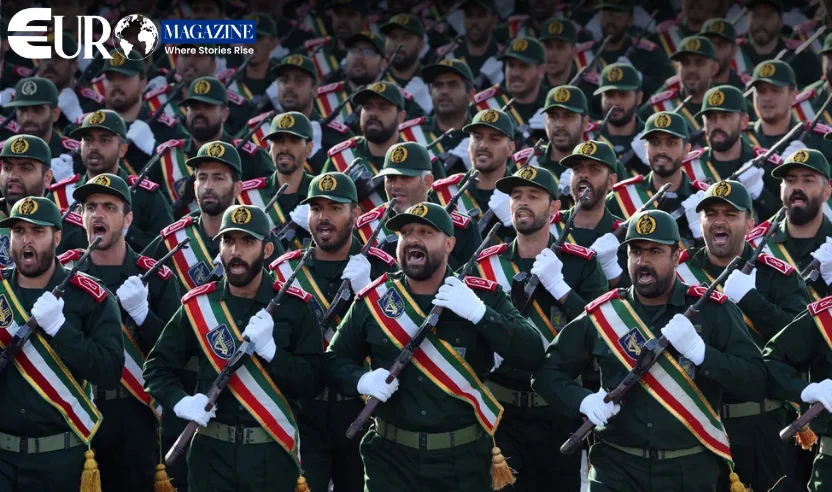
Tehran: Iran’s worsening currency crisis is closely tied to the growing economic influence of the Islamic Revolutionary Guard Corps (IRGC), which controls large parts of the country’s economy, analysts say.
From construction and energy to ports, transport and telecommunications, companies linked to the Revolutionary Guard hold a dominant position. Economists say this concentration of power has weakened competition, distorted access to foreign currency and reduced confidence in the Iranian rial.
Iran has seen nationwide protests in recent months, triggered by rapid currency devaluation and rising prices. Protesters have blamed the country’s leadership for economic hardship, with demonstrations reported in several major cities.
Currency collapse accelerates
At the time of Iran’s 1979 revolution, one U.S. dollar was worth about 70 rials. By early 2026, the exchange rate had fallen beyond 1.4 million rials per dollar, marking one of the steepest currency declines globally over the past four decades.
Authorities have largely blamed international sanctions for the collapse. However, analysts say internal economic structures have worsened the impact.
The IRGC, established after the 1979 revolution, expanded its economic role during the Iran-Iraq war in the 1980s. In the years that followed, IRGC-linked firms increasingly secured major government contracts, often without competitive bidding.
Parallel economy takes hold
Over time, IRGC-affiliated companies moved into oil and gas, infrastructure, mining, shipping and logistics. This created what experts describe as a dual system: a regulated civilian economy alongside a powerful parallel economy tied to military and security institutions.
Iranian officials have described this structure as a “resistance economy,” designed to help the country survive sanctions. Critics say it has instead concentrated wealth and limited opportunities for private businesses.
Sanctions hit oil revenues
Economic pressure intensified after the United Nations reimposed sanctions in September 2025, following the collapse of sanctions relief linked to nuclear agreements. The European Union also maintains sanctions related to human rights and Iran’s foreign activities.
According to Iran Open Data, Iran loses around 20% of potential oil export revenue due to the costly methods used to bypass sanctions. Oil is often sold at discounted prices and transported through indirect routes, reducing overall income.
The group estimates Iran earned about $23.2 billion from oil exports in the year to March 2025, around $5 billion less than it could have earned under normal market conditions.
Poverty rises
The World Bank has warned that Iran has experienced a prolonged period of weak growth. Between 2011 and 2020, per-capita GDP contracted by an average of 0.6% per year.
During that period, nearly 10 million Iranians fell into poverty, with more than 40% of the population now considered vulnerable to slipping below the poverty line.
Exchange rate controls worsen pressure
Iran has repeatedly used subsidised exchange rates to manage shortages. After U.S. sanctions were reimposed in 2018, the government introduced a fixed rate for essential imports. Access to cheaper dollars was gradually restricted, creating sharp gaps between official and market rates.
Economists say this system turned foreign currency into a political privilege, encouraging hoarding and capital flight and placing further pressure on the rial.
Public frustration grows
The economic strain is increasingly visible in Tehran’s Grand Bazaar, a historic trading centre often seen as a barometer of public sentiment. Shop closures and protests there signal deepening frustration among merchants and consumers alike.
Analysts say Iran’s currency instability is now driven not only by sanctions, but by long-standing structural issues within the economy.