
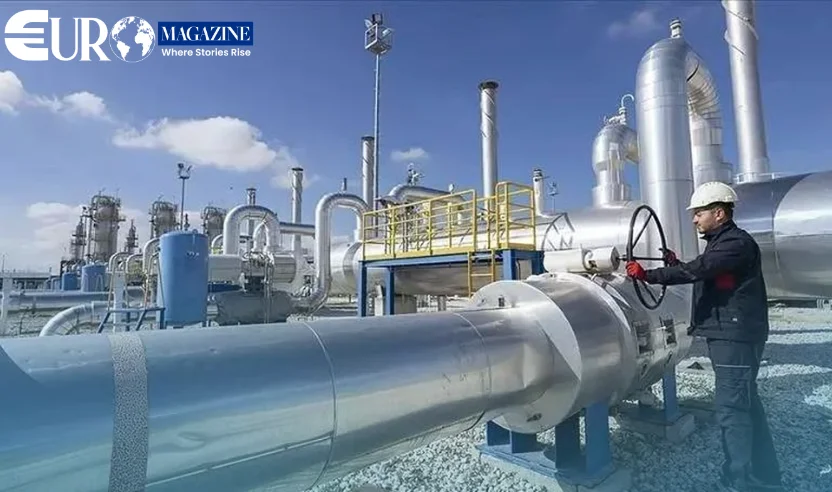
European natural gas prices surged sharply on Monday after Qatar stopped liquefied natural gas (LNG) production at its largest facility amid escalating tensions in the Middle East.
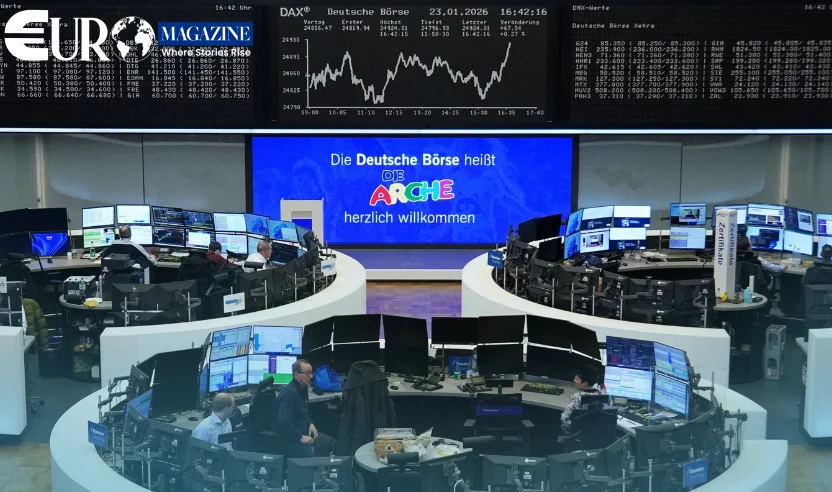
The benchmark European gas price on the Dutch TTF hub rose by as much as 45%, reaching around €46 per megawatt-hour in afternoon trading. UK gas prices also climbed significantly, with the NBP benchmark rising in line with continental markets.
The spike followed an announcement by QatarEnergy that it had halted LNG production linked to the North Field gas reservoir after an attack on its facilities. The company did not provide detailed information about the extent of the disruption.
Strait of Hormuz Fears
Market concerns were already high due to instability around the Strait of Hormuz, one of the world’s most important energy transit routes. A significant share of global oil and LNG shipments pass through the narrow waterway.
Reports indicate that tanker traffic slowed sharply over the weekend as shipping companies took precautionary measures. Analysts say vessel operators are unlikely to resume normal transits until security conditions improve.
Any sustained disruption could affect LNG shipments from Qatar, which supplies roughly 12% to 14% of Europe’s LNG imports.
Europe Faces Indirect Risk
Although Europe does not rely primarily on Qatari gas, analysts warn that global competition for LNG could intensify. If Asian buyers face supply shortages, they may seek alternative cargoes, driving up global prices.
Europe has depended more heavily on LNG imports since reducing reliance on Russian pipeline gas following the 2022 Ukraine war.
Low Storage Levels Add Pressure
Europe’s gas storage levels are currently below 30% capacity as winter comes to an end, compared with around 40% at the same time last year.
Germany’s storage facilities were about 20.5% full, while France stood at 21%, according to industry data. Lower reserves leave countries more exposed to price volatility and supply disruptions.
Analysts say markets are likely to remain highly volatile as geopolitical tensions continue to influence global energy flows.