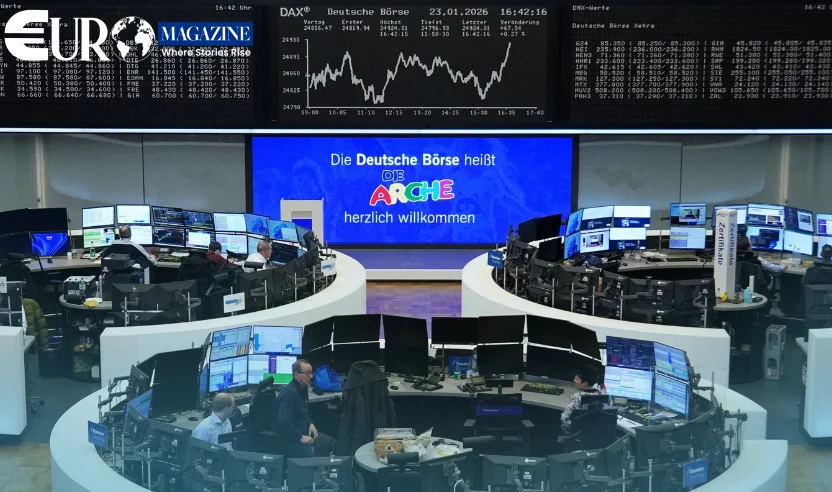


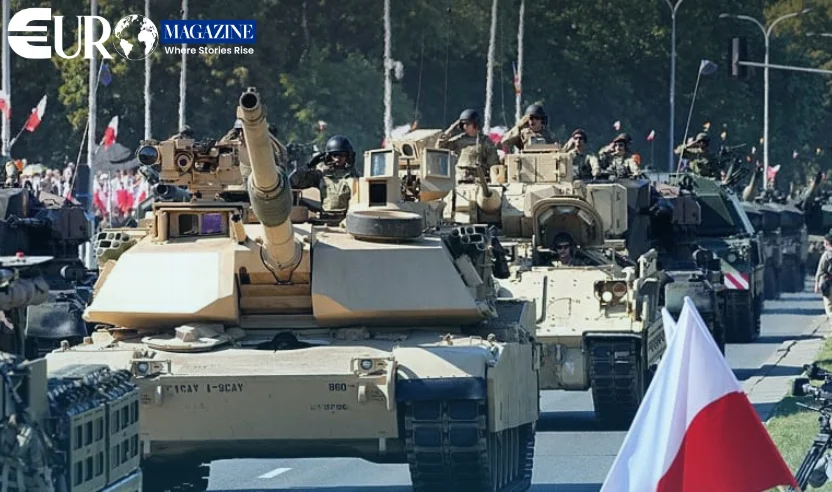
Europe’s accelerating military rearmament is reshaping fiscal priorities across the continent, prompting debate among economists over whether higher defence spending can also provide a lift to economic growth as the eurozone struggles to regain momentum.
The shift is most pronounced in Germany, where the government plans to raise defence spending to nearly 3.5% of gross domestic product by 2029, up from 2.1% in 2024. If implemented, the programme would represent one of the largest sustained military investment drives in post-war Europe, with annual defence outlays exceeding €100 billion by the end of the decade.
Economists say the increase is likely to provide a measurable, if limited, boost to growth. Goldman Sachs estimates that higher defence spending could lift the level of German GDP by around 0.8% by 2029, with defence-related factory orders already rising sharply after Berlin passed its 2025 budget.
Once approved by parliament, major defence contracts are recorded in official industrial data. Domestic German orders linked to the defence sector rose by more than 50% in late 2025 compared with already elevated levels following Russia’s invasion of Ukraine, signalling strong pipeline demand for manufacturers and suppliers.
In national accounts, defence spending supports output through several channels. On the production side, it raises value added in defence manufacturing and related supply chains. On the expenditure side, weapons systems count as government investment once ownership is transferred, while ammunition and partially completed equipment are reflected in inventory changes.
Economists at Goldman Sachs expect defence outlays to drive a stronger rise in government equipment investment over the coming years, helping offset weakness in other parts of the German economy.
Modest eurozone recovery expected
The broader eurozone outlook remains cautious but improving. Goldman Sachs forecasts economic growth of about 1.3% in 2026, slightly above projections by the European Central Bank, supported by fiscal spending, resilient consumer demand and easing trade frictions.
Germany’s defence-led fiscal expansion is expected to help stabilise the eurozone’s overall policy stance, counterbalancing tighter conditions elsewhere. Falling energy prices and wage growth outpacing inflation could further support household spending, while any easing of geopolitical tensions linked to Ukraine may improve the region’s energy cost outlook.
However, analysts warn that defence production has long lead times. Order books in the sector typically cover four to five years of output, meaning the impact on actual production and GDP will materialise gradually rather than immediately.
Structural limits remain
Economists also caution that higher military spending alone cannot address Europe’s deeper structural challenges. Persistent headwinds include rising competition from China, high energy costs, underinvestment in advanced technologies, regulatory complexity and ageing populations.
Goldman Sachs has warned that renewed export pressure from China could weigh on European trade by increasing import competition and limiting export growth, particularly in manufacturing-heavy economies such as Germany and Italy.
A partial, not permanent, solution
Defence spending is increasingly seen not only as a strategic necessity but also as a temporary macroeconomic support. While unlikely to transform Europe’s long-term growth trajectory on its own, rearmament could provide a meaningful cushion for economies facing industrial weakness.
For Germany, where fiscal space is being channelled into military investment, the stimulus effect may be significant in the near term. Whether the boost proves durable will depend on whether defence spending is accompanied by broader reforms aimed at strengthening productivity, innovation and competitiveness across the eurozone.