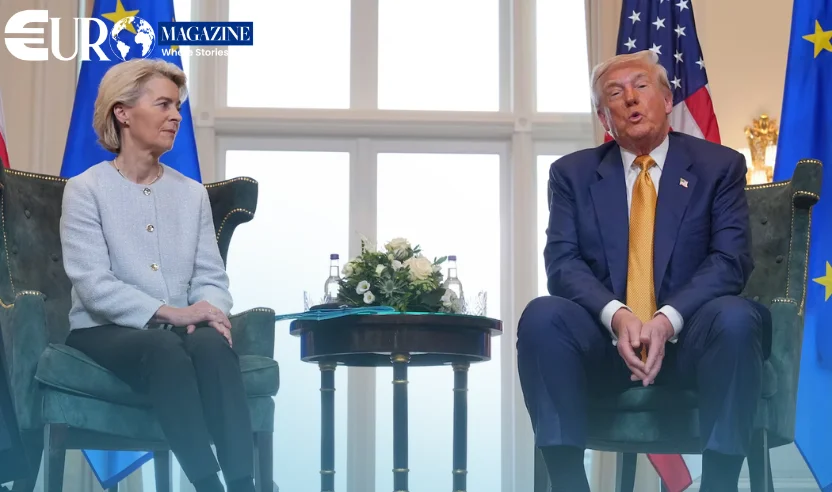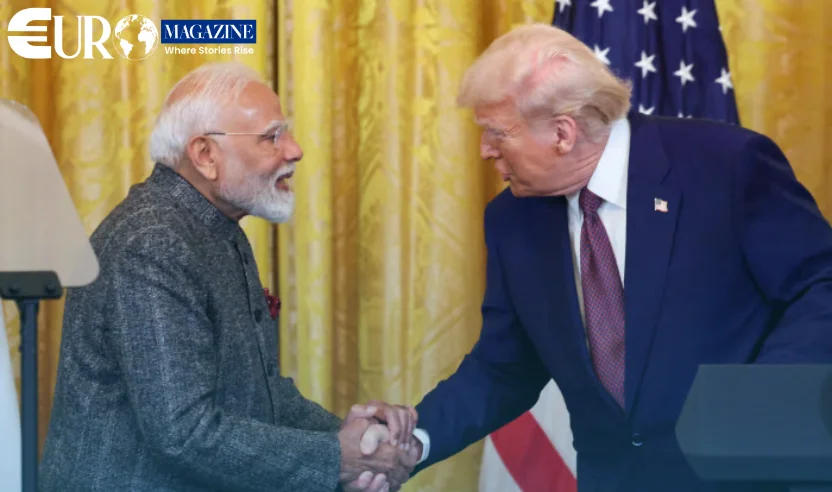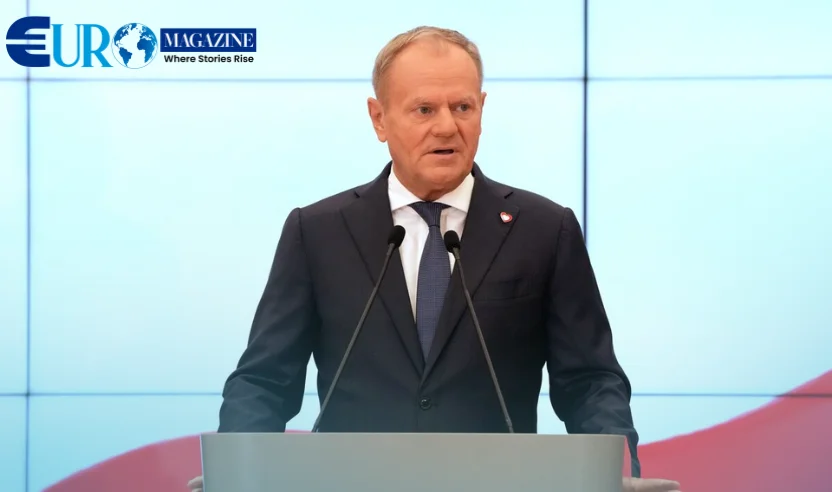

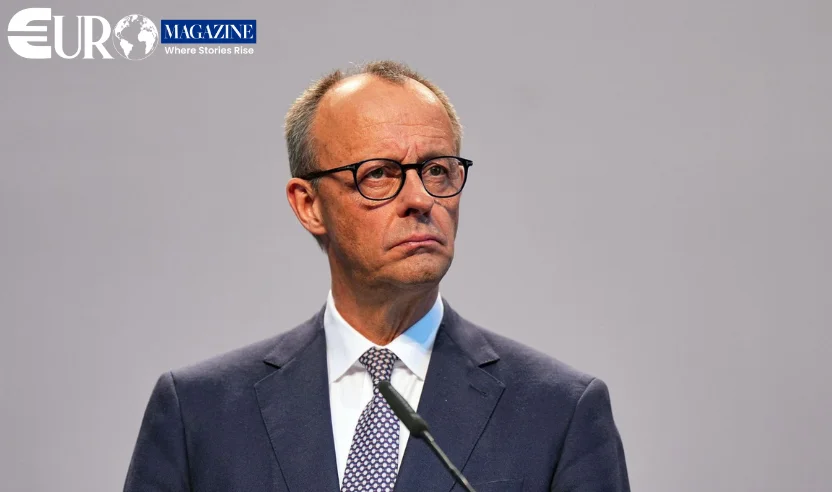
A long-awaited free trade agreement between the European Union and India could be finalised as early as February, German Chancellor Friedrich Merz said on Monday, signalling renewed momentum in talks that have stretched on for years.
Speaking during an official visit to India, Merz said Ursula von der Leyen and European Council President António Costa could travel to New Delhi by the end of the month to sign the agreement.
“In any case, they will take another major step forward to ensure that this free trade agreement comes into being,” Merz told reporters, describing the negotiations as having entered their final phase.
His comments come days after EU member states approved the contentious Mercosur trade pact, a deal strongly backed by Germany as part of the bloc’s broader strategy to diversify trade relationships beyond the United States and China.
Pushback against protectionism
Merz warned that rising protectionism is reshaping global trade dynamics, underscoring the EU’s urgency in expanding partnerships with major emerging economies.
“Unfortunately, we are seeing a renaissance of protectionism,” he said. “It is directed against the principles of free trade and open markets.”
The German leader described India as “the fastest-growing economy of the G20” and a “pivotal partner in the Indo-Pacific,” reinforcing Brussels’ view of New Delhi as a cornerstone of its long-term trade and geopolitical strategy.
Talks regain pace after missed deadline
The possibility of holding an EU-India summit by the end of January had already been discussed in Brussels after negotiations intensified late last year. However, the original goal of concluding a deal by the end of 2025 ultimately fell short.
Momentum picked up again last week when India’s Commerce and Industry Minister Piyush Goyal travelled to Brussels for high-level talks with EU trade chief Maroš Šefčovič, who has previously described Indian negotiators as “tough.”
Both sides face mounting trade pressures from Washington and Beijing. The United States has raised tariffs on multiple trading partners, while China has increasingly leveraged other countries’ dependence on raw materials and advanced technology.
Sustainability hurdles remain
Despite the optimism, negotiations have not been without friction. EU officials have acknowledged difficulties over the agreement’s sustainability chapter, particularly around proposals for a dispute-settlement mechanism linked to environmental standards.
India has also raised objections to the EU’s Carbon Border Adjustment Mechanism, adopted in 2023, which New Delhi argues could disadvantage Indian exporters.
Even so, Merz said he believes the talks are nearing completion, calling the prospective agreement “an encouraging sign” of the EU’s determination to continue forging new free trade partnerships.
Political tensions inside the EU
The EU’s push to diversify trade is also generating political fallout at home. In France, opposition to the Mercosur agreement has intensified amid fears that cheaper Latin American imports could threaten domestic farmers.
While von der Leyen is expected to travel to Paraguay on January 17 to sign the Mercosur deal, tensions have escalated between Emmanuel Macron and opposition parties, with both far-right and far-left groups calling for a vote of no confidence in his government.