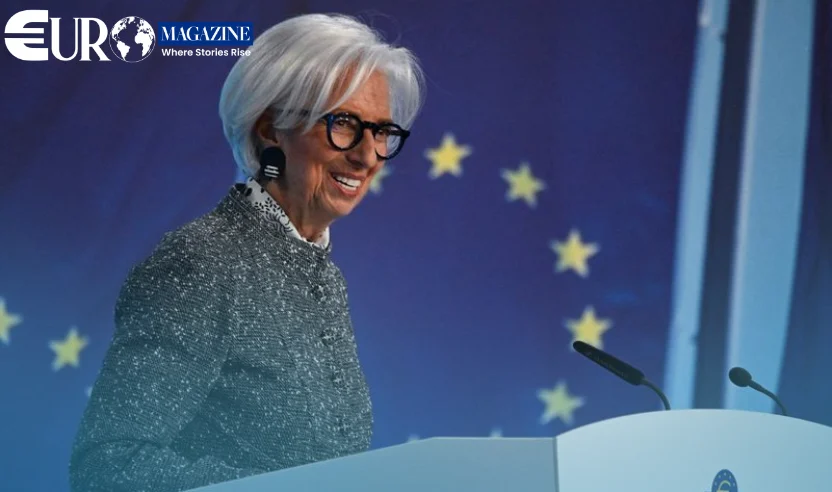

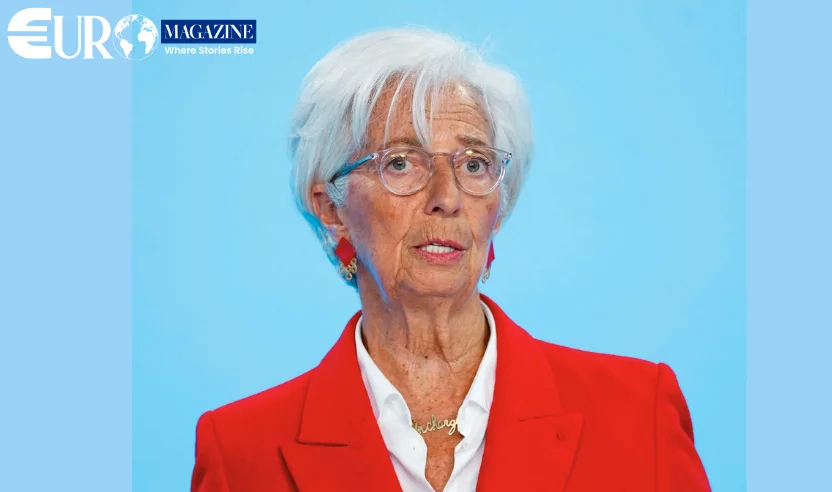
The European Central Bank left interest rates unchanged on Thursday, with President Christine Lagarde saying inflation dynamics remain broadly on track despite the latest data showing a temporary undershoot of the ECB’s target.
Speaking after the Governing Council meeting in Frankfurt, Lagarde said monetary policy is “in a good place,” stressing that the central bank will continue to assess conditions on a meeting-by-meeting basis and “cannot be hostage to one data point.”
Inflation eases below target
According to a flash estimate from Eurostat, euro area inflation fell to 1.7% in January, down from 2.0% in December. The decline was mainly driven by a sharp drop in energy prices, which fell 4.1% year-on-year.
Core inflation eased to 2.2%, its lowest level since late 2021, while services inflation slowed to 3.2%. Food inflation edged slightly higher to 2.7%.
Lagarde downplayed concerns about excessive disinflation, saying the decline largely reflects base effects and does not change the ECB’s medium-term outlook.
Bulgaria joins the euro area
The meeting also marked a milestone for the bloc, with Bulgaria formally joining the euro area as its 21st member from January 1, 2026. Bulgarian central bank governor Dimitar Radev took his seat on the ECB Governing Council, gaining voting rights.
Lagarde described the accession as a sign of the euro’s continued appeal and the long-term benefits of European integration.
Growth supported by technology and public investment
Economic activity in the eurozone showed moderate strength, with GDP expanding by 0.3% in the fourth quarter of 2025. Growth was led by services, particularly information and communication technology and AI-related sectors.
Lagarde said rising investment in data centres, hardware and digital infrastructure is helping support domestic demand, adding that artificial intelligence should be seen as a potential productivity boost rather than an inflation risk at this stage.
Construction activity also improved, supported by public spending on infrastructure and defence. Unemployment edged lower to 6.2% in December, while wage developments continue to be closely monitored.
Euro strength and reform agenda
Addressing the euro’s recent appreciation against the dollar, Lagarde reiterated that the ECB does not target exchange rates but factors currency movements into its inflation and growth assessments.
She also said the ECB will present EU leaders with a reform “checklist” ahead of an upcoming competitiveness summit, calling for faster progress on capital markets and banking union, the digital euro, and deeper integration of the single market.
“Significant reforms need to be accelerated to unlock Europe’s full potential,” Lagarde said.