

Tokyo - Japan narrowly sidestepped a technical recession at the end of 2025, with official data showing the economy expanded at an annualised rate of just 0.2 percent in the fourth quarter.
According to preliminary government figures released Monday, Japan’s gross domestic product rose 0.1 percent quarter-on-quarter between October and December. The modest growth followed a contraction in the previous quarter, preventing what would have been two consecutive quarters of negative expansion, the common benchmark for a technical recession.
Private consumption, a key driver of domestic demand, increased by 0.4 percent during the quarter. However, that improvement was partly offset by a 1.1 percent drop in exports, reflecting ongoing pressure on Japan’s trade-dependent economy.
For the full year, economic growth stood at 1.1 percent, underscoring the fragile pace of recovery. Revised data showed that in the third quarter the economy had contracted by 0.7 percent, equivalent to a 2.3 percent annualised decline.
Export Pressures and Policy Response
Japan’s export sector has faced headwinds amid global trade uncertainty, including the impact of US tariffs. The weaker external environment has weighed on industrial output and business confidence.
Although the economy technically avoided recession, analysts note that the latest figures signal persistent vulnerability.
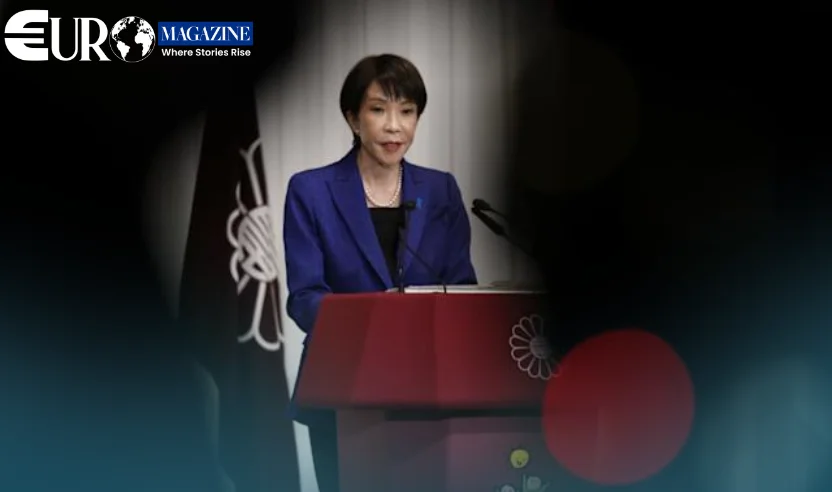
Prime Minister Sanae Takaichi, who secured a decisive election victory earlier this month, is expected to unveil measures aimed at revitalising growth. She has pledged increased public spending and a temporary suspension of the sales tax on food to support households.
Finance Minister Satsuki Katayama sought to calm market concerns over Japan’s elevated public debt and currency fluctuations. She suggested that foreign exchange reserves could be used to help fund national expenditures, though such reserves are traditionally reserved for currency stabilisation efforts.
Interest Rates at Multi-Decade High
The Bank of Japan raised its benchmark interest rate to 0.75 percent in December, marking the highest level in 30 years. Markets are closely watching the central bank’s next policy decision amid speculation over further tightening.
Takaichi has signalled a shift away from what she described as “excessively tight fiscal policy,” raising expectations of additional stimulus measures in the coming months.
The government forecasts average economic growth of around 0.6 percent in the near term, suggesting a subdued outlook despite the narrow escape from recession.
While Japan has avoided the formal label of contraction, the latest data highlight the delicate balance facing policymakers as they attempt to stabilise growth without unsettling financial markets.