

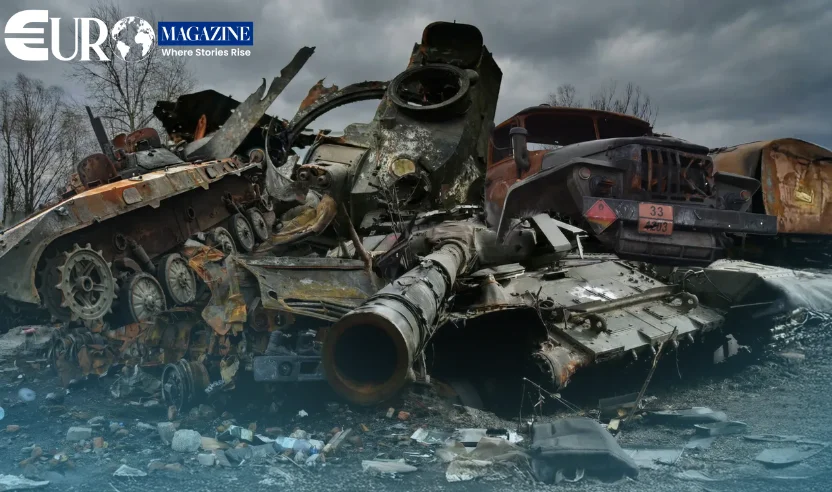
Kyiv — As Ukraine marks four years since Russia launched its full-scale invasion on Feb. 24, 2022, the conflict has evolved into a prolonged test of economic endurance, placing severe financial strain on the country and its international partners.
While the human and territorial losses remain central to global attention, economic data underscores the scale of the burden facing Ukraine. The country must fund daily military operations while preparing for one of the largest reconstruction efforts in modern European history.
According to figures cited by Andriy Hnatov, head of the General Staff of Ukraine’s Armed Forces, the war cost Ukraine an average of $172 million per day in 2025. This represents a sharp rise from about $140 million per day in 2024, an increase of nearly 23%.
The Ukrainian military now requires approximately $5 billion each month to cover salaries, ammunition, logistics and advanced defense technologies. More than 30% of Ukraine’s gross domestic product is currently allocated to military spending. By comparison, NATO members in peacetime are expected to spend at least 2% of GDP on defense.
Hnatov has warned that Ukraine cannot sustain this level of expenditure without continued financial support from Western allies. With domestic resources stretched, international assistance remains critical to preventing economic collapse.
At the same time, long-term reconstruction costs continue to rise. On the eve of the war’s fourth anniversary, Ukraine’s government, the World Bank, the European Commission and the United Nations released an updated Rapid Damage and Needs Assessment.
The report estimates that rebuilding and recovery over the next decade will cost nearly $588 billion. The figure is almost three times Ukraine’s projected nominal GDP for 2025.
Direct physical damage has surpassed $195 billion, with housing, transport and energy infrastructure among the hardest hit sectors. The World Bank noted a 21% increase in damaged or destroyed energy assets over the past year, largely due to intensified strikes during winter months.
Approximately 14% of Ukraine’s housing stock has been damaged or destroyed, affecting more than three million households and displacing millions of people.
Despite the scale of destruction, Ukrainian officials have expressed determination to rebuild. Prime Minister Yulia Svyrydenko said the country continues to recover and develop even amid repeated attacks on infrastructure.
European Union officials have reiterated their commitment to supporting Ukraine’s reconstruction, describing it as an opportunity not only to rebuild but to modernize the country. The private sector is expected to play a key role in mobilizing investment.
As the war enters its fifth year, the financial dimension of the conflict is becoming increasingly decisive. Ukraine faces the dual challenge of sustaining costly defense operations while securing the half-trillion-dollar investment needed to rebuild its economy.