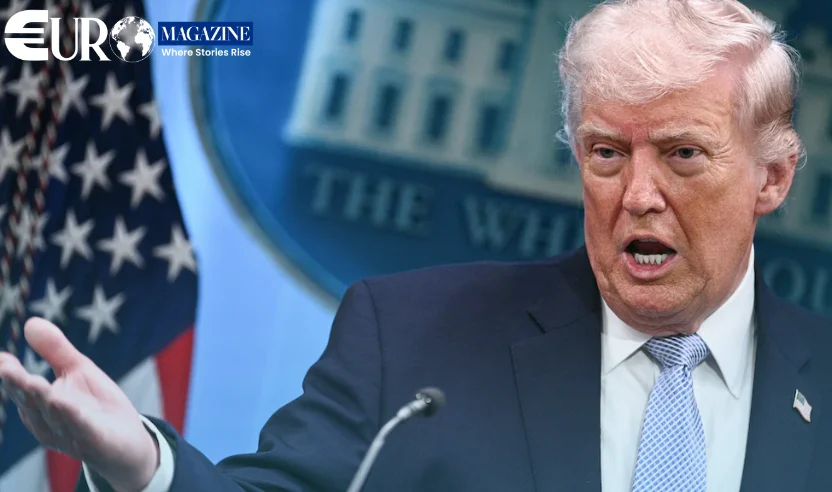

Brussels: The European Commission is seeking clarification from the White House after the US Supreme Court struck down sweeping tariffs imposed by US President Donald Trump.
The court ruled that Trump exceeded his authority by using an emergency law to impose tariffs on nearly all goods entering the United States. The decision has raised concerns about the future of the EU-US trade agreement signed last summer.
“We remain in close contact with the US Administration as we seek clarity on the steps they intend to take in response to this ruling,” said Olof Gill, deputy chief spokesperson for the Commission.
Trade Deal Now Under Review
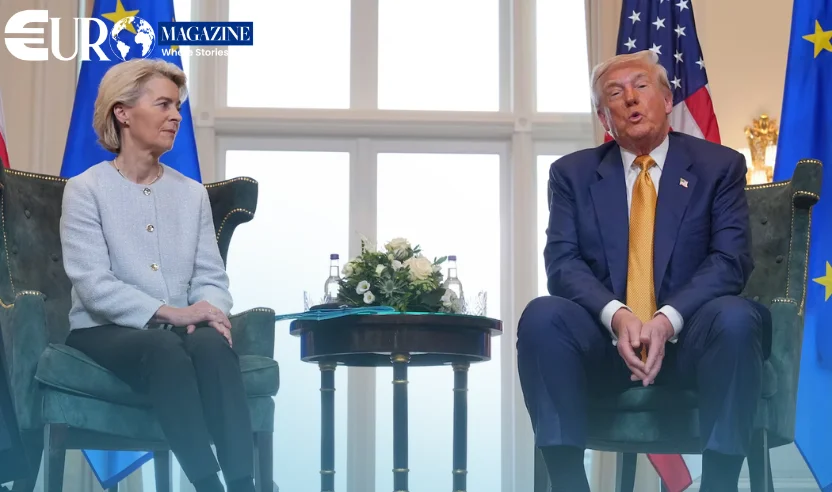
The EU-US trade deal was signed in July 2025 by Commission President Ursula von der Leyen and President Trump.
Under the agreement, a 15% tariff was applied to EU exports to the US, while duties on American industrial goods entering Europe were reduced to zero.
As part of the deal, the EU also pledged to purchase $750 billion worth of US energy products through 2028 and invest $600 billion in strategic sectors in the United States.
Following the Supreme Court ruling, the Commission said it is carefully analysing the legal implications of the decision.
Legal and Political Uncertainty
The Supreme Court ruled in a 6–3 decision that Trump could not justify broad tariffs under a national emergency law. However, the ruling does not affect sector-specific measures such as existing tariffs on steel and aluminium.
The decision has created uncertainty for European companies that have already paid tariffs and for those planning future investments.
Members of the European Parliament are now reviewing the impact of the ruling. An extraordinary meeting has been scheduled to assess whether the deal should proceed as planned.
Some lawmakers are considering amendments that would allow the EU to suspend or terminate the agreement in 2028 if necessary.
Businesses Seek Stability
The Commission said businesses on both sides of the Atlantic need stability and predictability in trade relations.
Officials stated that the EU continues to support lower tariffs and aims to maintain a balanced trade partnership with the United States.
For now, both sides are expected to continue discussions as legal and political questions surrounding the agreement remain unresolved.