
The United States has broadened a temporary sanctions waiver on Russian oil purchases, allowing buyers worldwide to purchase certain stranded shipments in an effort to stabilize global energy prices amid growing supply concerns.
US Treasury Secretary Scott Bessent announced the decision on Thursday, stating that the new authorization will permit countries around the world to buy Russian oil that is currently stranded at sea. The measure expands a previous 30-day waiver that had initially applied only to Indian refiners.
According to the US Treasury, the move aims to improve the availability of global oil supplies at a time when energy markets are facing heightened volatility due to geopolitical tensions, particularly the ongoing conflict involving Iran that has disrupted shipping routes in the Middle East.
Secretary Bessent said the authorization is intended to “increase the global reach of existing supply” and reduce pressure on global oil prices. The decision reflects growing concerns that disruptions in critical maritime corridors, including the Strait of Hormuz, could tighten supply chains and push fuel prices even higher.
The waiver was issued by the US Treasury Department’s Office of Foreign Assets Control (OFAC) and comes with strict limitations. Officials clarified that the authorization applies only to shipments of Russian oil that have already been loaded onto vessels and are currently stranded at sea.
New trade deals involving Russian oil are not permitted under the waiver, ensuring that the measure remains consistent with the broader sanctions regime imposed on Russia.
US officials also emphasized that the temporary authorization is unlikely to significantly benefit the Russian government financially. According to the Treasury Department, the majority of Russia’s energy revenue is generated through taxes collected at the point of oil extraction rather than from shipments already in transit.
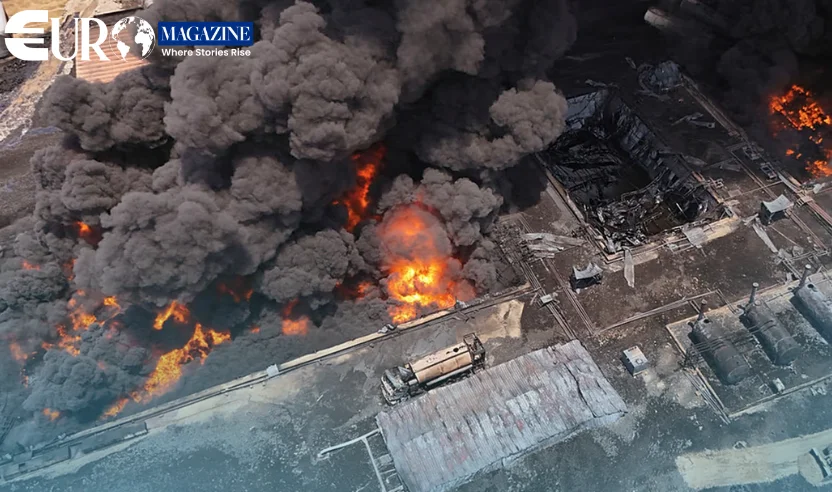
The policy adjustment comes at a time when global oil markets are experiencing strong upward pressure. Escalating tensions in the Middle East and attacks on shipping infrastructure have disrupted supply routes through key maritime corridors.
Repeated Iranian attacks targeting vessels and energy infrastructure near the Strait of Hormuz have raised fears of potential supply shortages. The strategic waterway handles a significant portion of the world’s oil exports, and any disruption there can quickly influence global energy markets.
In response to rising concerns, the International Energy Agency (IEA) earlier this week announced the largest emergency oil stockpile release in its history. Member countries agreed to release approximately 400 million barrels of oil from strategic reserves.
The United States alone pledged to contribute 172 million barrels as part of the coordinated effort to stabilize markets and ensure sufficient supply.
Despite the unprecedented reserve release, oil prices have remained elevated. Market benchmarks actually moved higher after the announcement, reflecting concerns that supply disruptions linked to the Iran conflict could persist.
Analysts say the limited impact of the reserve release highlights the scale of uncertainty currently affecting the energy market. Shipping disruptions, security risks in major oil transit routes, and geopolitical tensions have continued to fuel price volatility.
Benchmark crude prices were trading slightly above $100 per barrel at the time of the announcement, maintaining a level that has raised concerns among governments and consumers worldwide.
In addition to the waiver expansion, the Trump administration is reportedly considering further measures aimed at reducing energy costs.
One such step could involve temporarily suspending the Jones Act, a US maritime law that requires goods transported between US ports to be carried on vessels that are American-built, owned, and crewed.
If suspended, the law would allow foreign tankers to transport fuel along the US coastline, potentially lowering shipping costs and increasing domestic supply flexibility.
Energy analysts say the combination of policy measures—including the Russian oil waiver, strategic reserve releases, and potential regulatory adjustments—reflects the administration’s broader strategy to contain rising fuel prices.
However, experts caution that these steps may provide only temporary relief if geopolitical tensions continue to disrupt global supply routes.
Alongside the energy policy announcement, Secretary Bessent confirmed that he will travel to Paris on March 15 and 16 for economic discussions with Chinese Vice Premier He Lifeng.
The meetings will also include US Trade Representative Jamieson Greer and are part of the ongoing US-China economic dialogue.
According to the US Treasury, the talks aim to strengthen cooperation between the two countries and build on existing economic discussions between President Donald Trump and Chinese President Xi Jinping.
The Paris meetings are widely viewed as preparatory discussions ahead of President Trump’s planned visit to Beijing later this month.
US Secretary of State Marco Rubio is also expected to join the delegation despite previously facing sanctions from Beijing due to his earlier hardline stance on China before joining the administration.
With global oil markets facing persistent uncertainty, analysts say diplomatic engagement and coordinated energy policies may play a key role in stabilizing supply and moderating prices in the months ahead.