

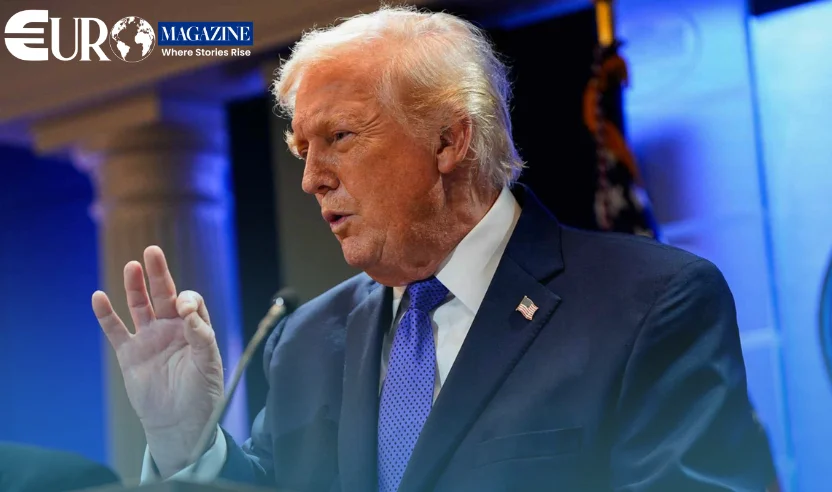
The Trump administration has launched new trade investigations targeting China, Mexico, the European Union and more than a dozen other economies, aiming to impose tariffs under U.S. trade law.
The investigations will be conducted under Section 301 of the Trade Act of 1974, U.S. Trade Representative Jamieson Greer said on Wednesday.
The move comes after the U.S. Supreme Court ruled that President Donald Trump’s reciprocal tariffs were illegal, saying they were imposed without proper authority.
Under Section 301, the United States can impose tariffs on countries found to be engaging in unfair trade practices.
Greer said the investigations will focus on manufacturing sectors where countries are believed to have excess production capacity, which may distort global markets.
“The president’s trade policy remains the same — to protect American jobs and ensure fair trade with our partners,” Greer said.
In addition to China, Mexico and the European Union, the investigations will also cover Japan, India, Taiwan, Vietnam, South Korea, Singapore, Switzerland, Norway, Indonesia, Malaysia, Cambodia, Bangladesh and Thailand.
The Office of the U.S. Trade Representative will now collect public comments and hold hearings as part of the investigation process. Officials will also consult with the countries involved before making final decisions.
If unfair trade practices are confirmed, the United States could introduce tariffs, service fees or other trade measures.
The investigations are part of a broader effort by the administration to restore tariff policies that were previously blocked by the Supreme Court.
In February, the court ruled that Trump lacked authority to impose global tariffs under the International Emergency Economic Powers Act (IEEPA).
Following that decision, Trump introduced a temporary 10% global tariff under Section 122 of the Trade Act, which can only remain in place for 150 days.
Treasury Secretary Scott Bessent recently said the administration expects U.S. tariffs to return to earlier levels by August, once new trade investigations and studies are completed.