

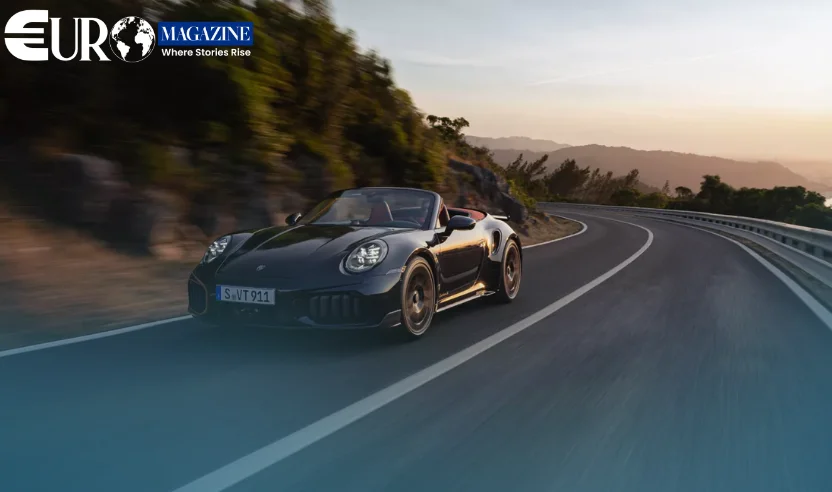
Porsche AG’s operating profit dropped sharply in 2025 after the luxury carmaker recorded €4.7 billion in one-time accounting charges, nearly wiping out its annual earnings and highlighting growing challenges in Europe’s electric vehicle transition.
According to the Volkswagen Group’s full-year earnings report, Porsche’s operating profit fell by 98%, declining from €5.3 billion to €90 million. The dramatic drop was primarily caused by two major accounting adjustments related to changes in the company’s long-term strategy.
The first charge, worth €2.7 billion, was a goodwill impairment. Goodwill represents the estimated value of Porsche’s brand strength, future earnings potential, and market position recorded on Volkswagen’s balance sheet. When companies revise their future earnings outlook downward, accounting rules require them to reduce the reported value of that goodwill.
This adjustment does not involve an actual cash loss but reflects a recalculation of the company’s projected value based on updated expectations.
The second charge, amounting to €2.0 billion, was related to a product realignment. Porsche has decided to abandon plans for a new all-electric vehicle platform that was intended to support the company’s future EV lineup. Instead, the automaker is shifting its strategy to focus more on internal combustion engines and plug-in hybrid vehicles.
Industry analysts say scrapping a major development program after years of investment forces companies to recognize those costs immediately as a single accounting charge rather than spreading them over several years.
Porsche had long been one of the most profitable car manufacturers globally, with an operating margin of 14.5% in 2024, significantly higher than most mass-market automakers, which typically operate on margins between 3% and 6%.
Within the Volkswagen Group, Porsche and Audi have historically served as the company’s strongest profit generators. As a result, Porsche’s profit decline has had a broader impact on the group’s overall financial performance.
The deeper issue for the European automotive sector is the difficulty of transitioning to electric vehicles while maintaining profitability. Porsche had positioned itself as Volkswagen’s flagship luxury EV brand, but demand has fallen short of expectations.
The company’s Taycan electric sedan, once expected to lead Porsche’s electric lineup, has recorded weaker-than-anticipated sales in key markets.
China, previously considered a major growth market for premium electric vehicles, has become increasingly competitive as local manufacturers introduce technologically advanced models at lower prices. At the same time, new US tariffs on imported vehicles have increased costs for European automakers operating in the American market.
As a result, Porsche has begun extending the lifespan of several combustion engine models and delaying parts of its electrification strategy.
The company’s operational performance has also weakened beyond the accounting adjustments. In 2025, vehicle sales declined by 15% year-on-year, while revenue dropped 12% to €32.2 billion.
The financial strain has also affected the wider Volkswagen Group. The German automaker reported that its net profit fell 44% to €6.9 billion in 2025.
In response, Volkswagen announced plans to cut around 50,000 jobs in Germany by 2030 as part of a broader restructuring effort. Porsche itself is expected to reduce approximately 3,900 positions, including temporary staff.
Industry experts say the developments raise broader questions about the pace and cost of Europe’s transition to electric mobility, particularly for premium automotive brands that had invested heavily in EV development.