
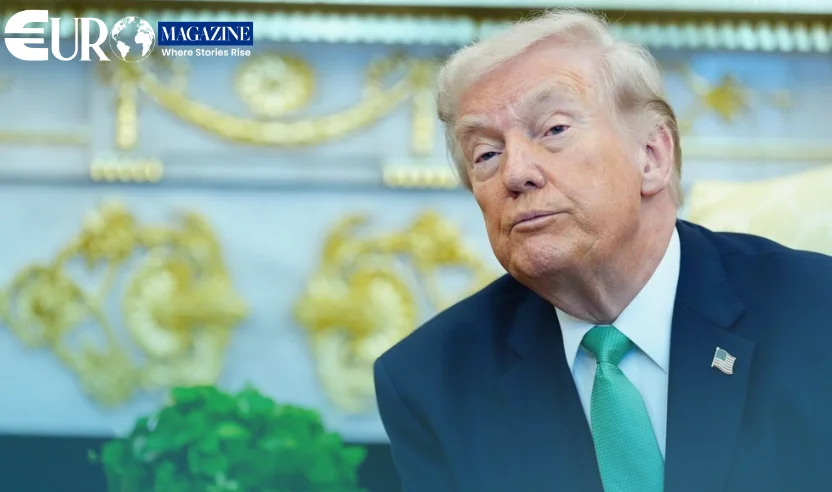
Global financial markets showed signs of relief on Monday after US President Donald Trump indicated progress in diplomatic engagements with Iran, raising expectations of a potential de-escalation in the ongoing conflict. Oil prices declined significantly while major stock markets across the United States and Europe posted strong gains, reflecting renewed investor confidence following days of volatility driven by geopolitical tensions.
Oil Prices Retreat from Recent Highs
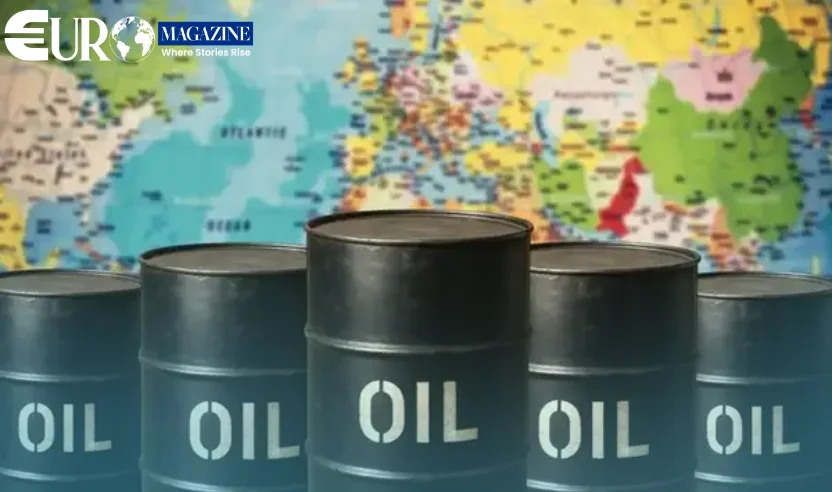
Benchmark crude prices dropped sharply after the announcement. US West Texas Intermediate (WTI) fell below $89 per barrel, down from levels above $100 earlier in the day. Meanwhile, Brent crude, the global benchmark, declined by more than 10%, trading just above $100 per barrel after reaching highs of approximately $113.
The recent fluctuations highlight the volatility in energy markets since the conflict began, with Brent prices swinging from around $70 per barrel to nearly $120 in recent weeks.
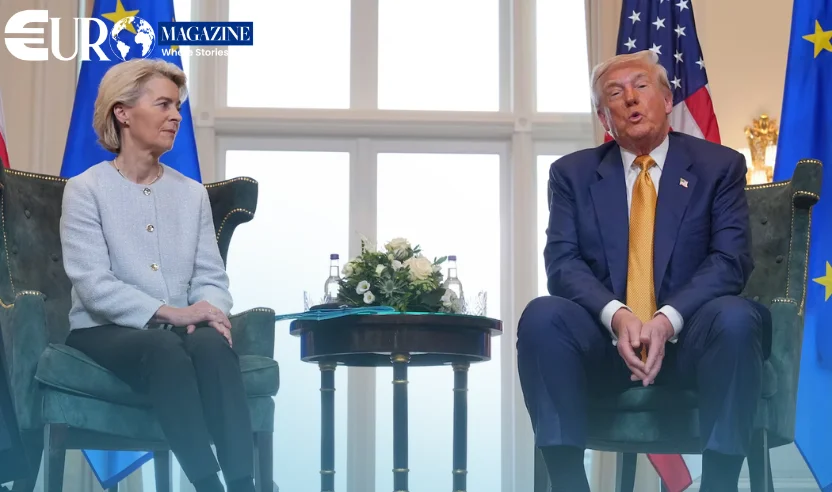
The easing came after Trump stated that the United States had engaged in “productive conversations” with Iran over the weekend, aimed at resolving hostilities in the Middle East. He also confirmed a five-day pause on planned military strikes targeting Iranian energy infrastructure.
Stock Markets Rebound Strongly
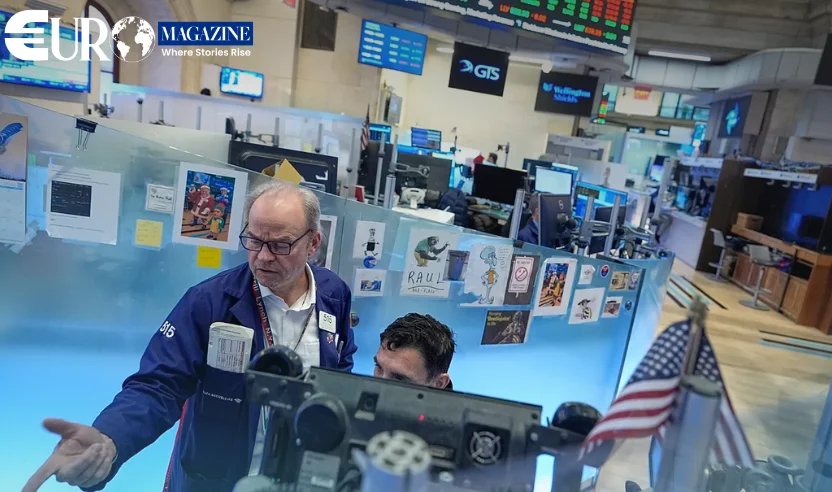
Equity markets responded positively to the diplomatic signals. On Wall Street, major indices surged:
-
The S&P 500 rose nearly 2%
-
The Dow Jones Industrial Average gained over 2.1%
-
The Nasdaq Composite climbed approximately 2.2%
European markets also reversed earlier losses, closing higher across major exchanges. Germany’s DAX jumped more than 2.4%, while France’s CAC 40 and Spain and Italy’s indices each recorded gains exceeding 1.5%. The UK’s FTSE 100 posted a more modest increase of around 0.7%.
Conflicting Signals on Diplomacy
Despite the optimism, uncertainty remains. Iran’s foreign ministry has denied holding any direct talks with the United States, according to state-affiliated media reports, creating ambiguity around the actual progress of negotiations.
Trump, however, maintained that discussions were ongoing and suggested further developments could emerge in the coming days.
Energy Markets Remain on Edge
Earlier warnings from the International Energy Agency (IEA) underscored the fragility of the situation. The agency cautioned that the global economy faces a “major threat” due to disruptions caused by the conflict, noting damage to multiple energy assets across several countries.
Natural gas prices in Europe also reacted to the news, falling below €55 per megawatt-hour, down from around €60 earlier in the day.
Asia Markets Close Lower Amid Earlier Uncertainty
While Western markets rallied, Asian markets closed in negative territory before Trump’s announcement. Japan’s Nikkei 225 dropped 3.5%, South Korea’s Kospi plunged 6.5%, and Hong Kong’s Hang Seng declined 3.8%, reflecting earlier fears over escalating tensions.
Currency and Gold Markets Adjust
Currency markets also reacted to the developments. The US dollar weakened against major currencies, with the euro rising to approximately $1.16 and the British pound strengthening to around $1.34. The Japanese yen also gained ground.
Meanwhile, gold prices — often considered a safe-haven asset — declined nearly 2%, indicating reduced immediate demand for risk-off investments.
Outlook: Volatility Likely to Persist
Despite the temporary relief, analysts caution that markets remain highly sensitive to geopolitical developments. The ongoing conflict continues to pose risks to global energy supply chains, particularly in the strategically critical Strait of Hormuz region.
Any disruption in oil and gas flows from the Persian Gulf could trigger renewed price spikes and inflationary pressures, potentially affecting central bank policies and global economic stability.
For now, markets are reacting to signs of diplomatic progress — but the situation remains fluid, and volatility is expected to continue in the near term.