
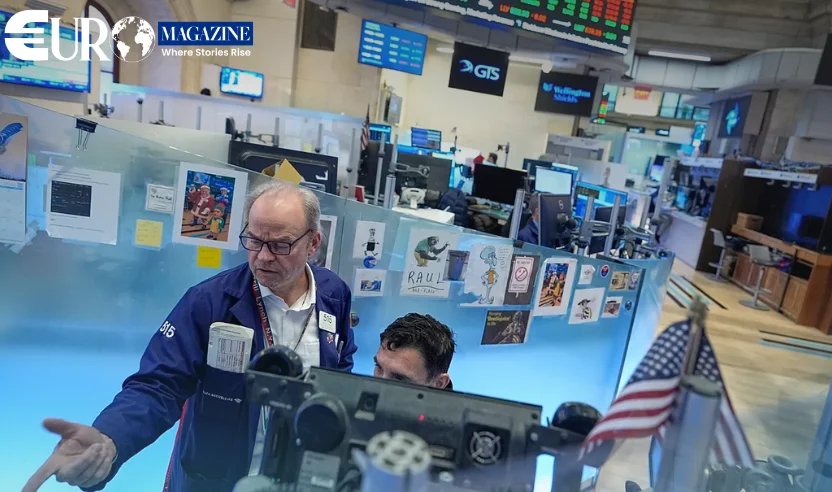
Global stock markets declined on Thursday as rising oil prices linked to escalating tensions in the Iran war weighed on investor sentiment and heightened inflation concerns. Brent crude, the international benchmark, briefly rose above $119 per barrel before easing to $110.80, up 3.2% on the day. U.S. crude gained 0.7% to $96.09 following intensified attacks on oil and gas infrastructure in the Gulf.
The latest strikes have raised fears of prolonged disruptions to energy production, with analysts warning that sustained supply constraints could keep prices elevated and add to global inflationary pressures.
Equity markets fell across major regions. European indices recorded sharp losses, with Germany and the United Kingdom down around 2.5%, while France’s CAC 40 declined 1.9% in afternoon trading.
On Wall Street, losses were more moderate. The S&P 500 fell 0.4%, marking its fourth consecutive weekly decline, while the Dow Jones Industrial Average dropped 188 points (0.4%) and the Nasdaq Composite declined 0.6%.
Investor concerns have shifted toward the risk of oil-driven inflation, prompting a reassessment of interest rate expectations. Markets are now pricing in a higher likelihood that central banks may maintain or even increase rates in 2026.
Earlier in the day, both the European Central Bank and the Bank of England held interest rates steady, signalling caution amid rising energy costs.
U.S. Treasury yields rose, with the two-year yield reaching 3.81%, its highest level since summer, while the 10-year yield stood at 4.26%, reflecting increased expectations of tighter monetary policy.
Economic data added to the upward pressure on yields, as U.S. unemployment claims fell unexpectedly and regional manufacturing activity strengthened.
Rising yields have increased borrowing costs and weighed on asset classes including equities, commodities and cryptocurrencies.
Precious metals declined sharply, with gold falling 6.6% to $4,575.60 per ounce and silver down 11.9%. Mining stocks also dropped, while technology shares showed mixed performance.
Some gains were recorded in the electric vehicle sector, with Rivian Automotive rising 8.5% after announcing a partnership with Uber, which plans to invest up to $1.25 billion and deploy autonomous vehicles.