
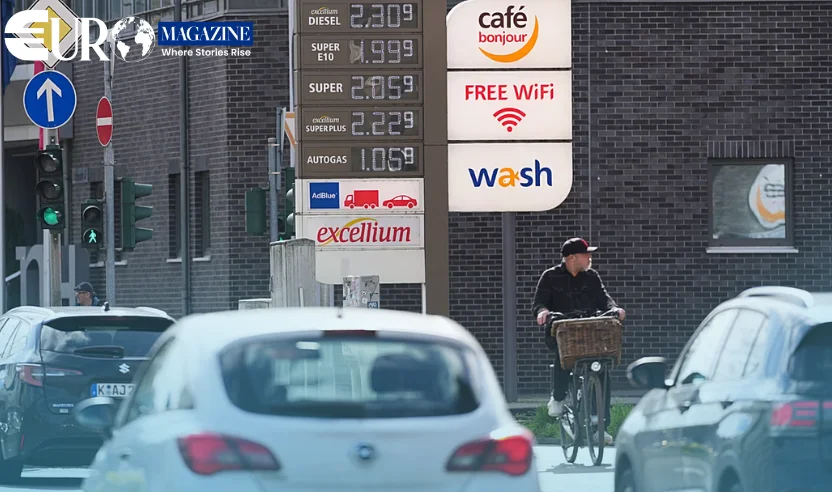
Petrol prices in Germany have climbed noticeably faster than in most European countries in recent weeks, putting fresh pressure on households and prompting a political response in Berlin.
While fuel costs have gone up across Europe following rising tensions in the Middle East, the increase in Germany has been steeper than elsewhere. Prices at the pump have risen by nearly five per cent, compared with more moderate increases in countries such as France and Austria.
For many drivers, the difference is becoming increasingly visible. Petrol in Germany is now hovering just above €2 per litre, placing it among the highest in the European Union.
Why Germany Is Feeling It More
The main reason lies in how fuel is taxed. Germany has long imposed higher energy taxes, along with additional charges linked to carbon emissions. These measures are part of broader environmental and fiscal policies, but they also mean that any increase in global oil prices is felt more strongly by consumers.
In simpler terms, when the base price of fuel rises, German motorists end up paying more on top of it than drivers in many neighbouring countries.
A Wider Gap Across Europe
The contrast is clear when compared with other EU countries. While Germany has seen close to a five per cent jump, increases elsewhere have been smaller — around two per cent in France and Austria, and even less in parts of Central Europe.
Only a handful of countries, including the Netherlands and Finland, are currently recording similarly high fuel prices.
Government Steps In
The sharp rise has caught the attention of policymakers. The German government has set up a task force to look into the situation, including whether fuel pricing reflects actual market conditions.
Some officials have openly questioned why prices tend to rise quickly when oil costs go up, but fall more slowly when they decline. There are now discussions around introducing rules that would limit how often petrol stations can raise prices during the day.
At the same time, there are growing calls for greater oversight of the fuel market.
Industry Pushback
Fuel companies, however, reject the criticism. Industry representatives argue that taxes and government-imposed charges make up a large share of the final price, leaving limited room for manipulation.
They also warn that tighter controls could disrupt market competition rather than lower prices in a meaningful way.
Pressure Likely to Continue
For now, the situation remains uncomfortable for consumers. Driving is an essential part of daily life for many in Germany, and higher fuel costs are feeding into broader concerns about the cost of living.
With global energy markets still unsettled, and no immediate resolution to geopolitical tensions, prices are likely to remain under pressure in the near term.
The debate in Germany now centres on how much of that burden should be absorbed by policy—and how much by the market itself.