

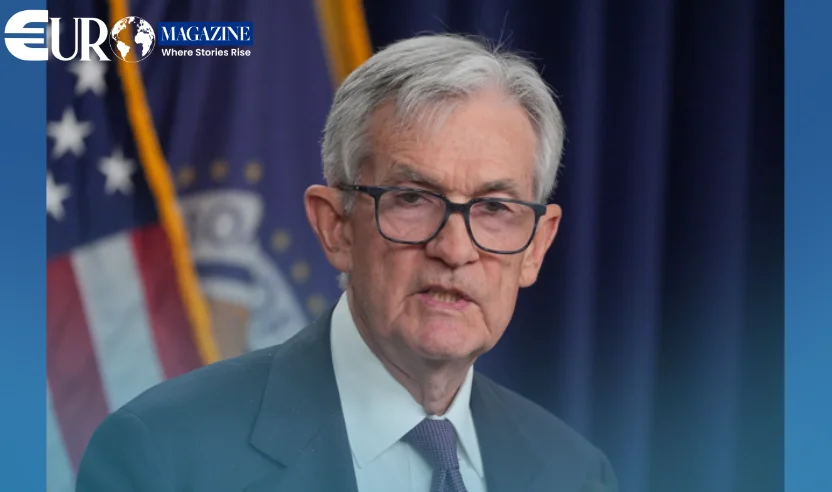
The US Federal Reserve has indicated it expects to implement one interest rate cut in 2026, while maintaining that the ongoing conflict involving Iran is unlikely to significantly affect overall economic growth. The central bank kept its benchmark interest rate unchanged at approximately 3.6% for the second consecutive meeting, reflecting a cautious approach amid global uncertainty.
In its latest policy statement, the Federal Reserve acknowledged that developments in the Middle East could influence inflation trends but emphasized that the broader economic impact remains uncertain.
Policymakers noted that the conflict is expected to push inflation higher in the short term, primarily due to rising fuel prices. Inflation is now projected to reach 2.7% by the end of the year, slightly above earlier estimates. Core inflation, which excludes food and energy, is also forecast at the same level.
Despite this upward pressure, the Fed expects inflation to gradually ease in the coming years, declining to 2.2% by 2027 and eventually reaching its long-term target of 2% by 2028.
Officials indicated that the increase in energy costs is likely to be temporary and could reverse if geopolitical tensions subside.
Importantly, the Federal Reserve does not anticipate any lasting impact on key economic indicators such as growth and employment. The US economy is projected to expand by 2.4% this year, marginally higher than previous forecasts, while the unemployment rate is expected to remain stable at 4.4%.
By maintaining its earlier projections for rate cuts, the Fed signaled confidence that the current inflationary pressures will be manageable without derailing economic stability.
As global uncertainties persist, the central bank continues to monitor developments closely while balancing inflation control with sustained economic growth.