
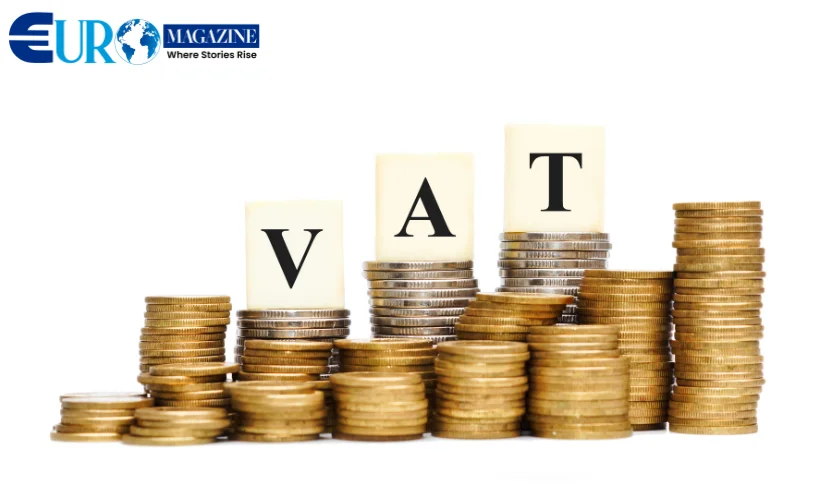
Cross-border Value Added Tax (VAT) compliance has become one of the most complex operational challenges for businesses trading within the European Union. What was once considered a technical accounting matter has evolved into a strategic issue that affects pricing models, cash flow management, regulatory risk, and expansion planning.
As intra-EU trade increases—driven by digital services, decentralised supply chains, and cross-border e-commerce—tax authorities have intensified oversight. At the same time, the European Union has introduced simplification mechanisms that reduce administrative burden but demand higher levels of accuracy and documentation.
This guide provides a structured, business-oriented analysis of cross-border VAT in the EU. It explains how the system functions in practice, where businesses most frequently encounter risk, and how organisations can manage VAT obligations with discipline rather than disruption.
1. The Structural Design of the EU VAT System
The EU VAT framework is based on harmonised legislation but decentralised enforcement. EU directives establish common principles, while individual member states retain responsibility for administration, audits, and penalties.
This structure creates a dual compliance environment:
-
Legal alignment at EU level
-
Procedural variation at national level
For businesses, this means VAT treatment is consistent in theory but fragmented in execution. Understanding this distinction is essential when expanding across borders.
2. Determining VAT Treatment: The Foundational Questions
Before applying any VAT rule, businesses must answer three foundational questions:
-
Is the transaction a supply of goods or services?
-
Is the customer a taxable business or a private consumer?
-
Where is the place of supply for VAT purposes?
Errors at this stage cascade into incorrect invoicing, reporting failures, and audit exposure. Most VAT disputes originate from incorrect classification rather than deliberate non-compliance.
3. Goods vs Services: Why Classification Matters
Goods
A supply of goods involves the physical movement of products between EU member states. VAT treatment depends on:
-
Origin and destination of goods
-
VAT status of the buyer
-
Evidence of cross-border movement
Services
Services follow separate rules based on customer location and service type. This includes:
-
Professional services
-
Software and SaaS
-
Licensing and intellectual property
-
Digital subscriptions
Misclassifying services as goods—or vice versa—is a frequent cause of reassessment.
4. B2B Transactions and the Reverse Charge Mechanism
Purpose of the Reverse Charge
The reverse charge mechanism shifts VAT liability from supplier to customer in cross-border B2B transactions. It reduces fraud risk and administrative duplication.
Practical Conditions
For the reverse charge to apply:
-
Both parties must be VAT-registered
-
The customer’s VAT number must be verified
-
The invoice must explicitly state the reverse charge
-
The transaction must be reported correctly in VAT returns and EU sales listings
Failure to meet any one of these conditions can invalidate the reverse charge and transfer VAT liability back to the supplier.
5. B2C Transactions and Destination-Based VAT
In B2C transactions, VAT is charged in the customer’s country of residence. This principle applies regardless of where the seller is established.
Implications for businesses:
-
Multiple VAT rates must be applied correctly
-
Pricing strategies must account for country-specific VAT
-
Reporting obligations increase significantly
For SMEs, B2C VAT exposure is often underestimated during international expansion.
6. VAT Registration Obligations Across the EU
VAT registration requirements remain one of the most operationally challenging areas.
A business may be required to register locally if it:
-
Stores inventory in another member state
-
Uses fulfilment centres or warehouses
-
Supplies goods locally
-
Exceeds distance-selling thresholds
-
Participates in domestic events or installations
Each member state imposes different:
-
Registration timelines
-
Documentation requirements
-
Penalty regimes
Delayed registration frequently results in retroactive VAT assessments and interest charges.
7. One Stop Shop (OSS): Scope and Limitations
The One Stop Shop was introduced to simplify VAT reporting for cross-border B2C supplies.
What OSS Achieves
-
Centralised VAT reporting for eligible transactions
-
Reduced need for multiple VAT registrations
-
Improved administrative efficiency
What OSS Does Not Cover
-
B2B transactions
-
Inventory-related obligations
-
Certain services and goods
-
Historical VAT liabilities
Businesses relying on OSS without understanding its boundaries often develop compliance blind spots.
8. Import VAT and the IOSS Framework
Import VAT applies when goods enter the EU from outside the bloc.
The Import One Stop Shop:
-
Applies to low-value consignments
-
Allows VAT to be collected at point of sale
-
Reduces customs clearance delays
However, IOSS requires:
-
Accurate transaction-level reporting
-
Tight coordination with logistics providers
-
Continuous reconciliation of VAT collected and declared
Errors in IOSS filings can disrupt supply chains and trigger customs intervention.
9. E-Commerce and Marketplace VAT Obligations
E-commerce has fundamentally altered VAT enforcement.
Key developments include:
-
Marketplace liability for VAT in specific scenarios
-
Mandatory data sharing between platforms and authorities
-
Increased scrutiny of cross-border sellers
For online businesses, VAT compliance is now deeply embedded in platform operations, payment processing, and customer data management.
10. Digital Services VAT: Evidence and Verification
Digital services are taxed at the customer’s location. Businesses must collect and retain at least two independent pieces of evidence confirming location, such as:
-
Billing address
-
IP address
-
Payment instrument location
Inadequate evidence invalidates VAT treatment during audits, regardless of intent.
11. Documentation, Record Retention, and Audit Exposure
VAT compliance is documentation-driven.
Businesses must retain:
-
VAT-compliant invoices
-
Proof of transport for goods
-
Customer VAT validations
-
Transaction records
Retention periods vary but typically exceed five years. In cross-border audits, documentation deficiencies are penalised more severely than calculation errors.
12. Enforcement Trends and Audit Coordination
EU tax authorities increasingly cooperate across borders through:
-
Shared databases
-
Automated transaction matching
-
Joint audit initiatives
SMEs are no longer overlooked. Authorities now target inconsistencies rather than company size.
13. Common Strategic Errors Businesses Make
Most VAT failures result from:
-
Treating VAT as an accounting task rather than a business process
-
Poor coordination between sales, logistics, and finance teams
-
Overreliance on simplification schemes
-
Inadequate system integration
These issues are structural, not technical.
14. Building a Sustainable VAT Management Framework
Businesses that manage VAT effectively adopt:
-
Automated VAT validation tools
-
Clear internal responsibility structures
-
Regular compliance reviews
-
Early advisory involvement during expansion
VAT should be integrated into commercial decision-making, not addressed retrospectively.
15. The Direction of EU VAT Reform
EU VAT policy is moving toward:
-
Real-time reporting
-
Expanded digital monitoring
-
Reduced tolerance for manual processes
Future compliance will demand accuracy by design, not correction after submission.
Conclusion
Cross-border VAT in the EU is complex by necessity, reflecting the balance between a unified market and national tax sovereignty. For businesses, this complexity is manageable only through structured processes, informed classification, and disciplined execution.
Companies that treat VAT as a strategic function—aligned with growth, pricing, and operations—reduce risk and gain confidence in cross-border trade. In the current European environment, VAT compliance is not merely a legal obligation; it is a prerequisite for sustainable expansion.
You may also like:-