


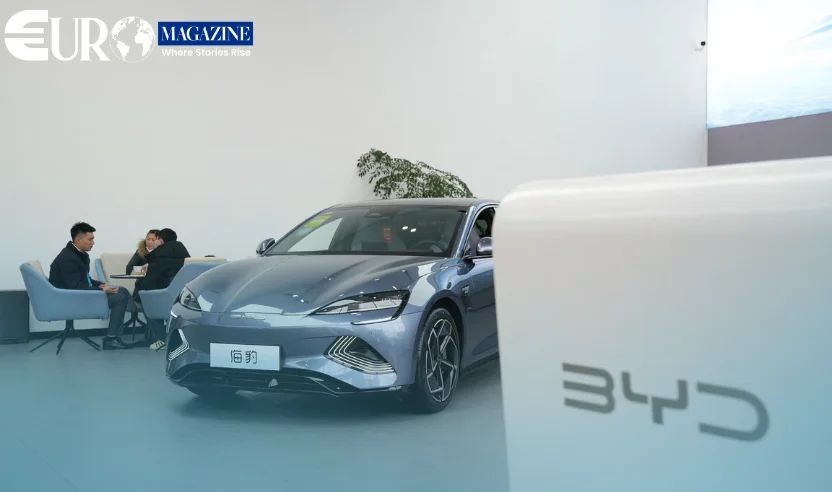
BYD reported a 19% decline in annual profit for 2025, highlighting growing pressure from intense competition in China’s electric vehicle market, even as it strengthened its lead over Tesla in global sales. The company said net profit attributable to shareholders dropped to 32.6 billion yuan ($4.4 billion), compared with 40.3 billion yuan a year earlier. Revenue showed modest growth, rising 3.5% to 804 billion yuan, indicating stable demand despite margin pressures.
The earnings reflect the impact of an ongoing price war in China, where automakers have aggressively reduced prices to maintain market share in the world’s largest EV market.
Despite the profit decline, BYD expanded its dominance in battery electric vehicle sales. The company delivered approximately 2.25 million fully electric vehicles in 2025, marking a 27.9% increase from the previous year. In comparison, Tesla reported around 1.64 million deliveries, representing a decline of about 9%.
This widened the gap between the two companies to more than 600,000 units, cementing BYD’s position as the global leader in EV sales.
Tesla, which had long dominated the sector, has faced increasing competition, particularly in China and Europe. The company also reported weaker financial performance, with annual profit falling to $3.8 billion and revenue from vehicle sales declining year-on-year.
Market dynamics in China played a significant role in BYD’s profit decline. The domestic EV sector has become highly competitive, with multiple manufacturers offering discounts and incentives to attract buyers. Industry groups have previously cautioned against aggressive pricing strategies, warning of pressure on profitability across the sector.
While domestic conditions remain challenging, BYD is increasingly focusing on international expansion. The company recorded strong growth in overseas markets, with sales outside China surpassing one million units for the first time in 2025.
In Europe, BYD’s sales growth has been particularly notable, supported by rising demand for electric vehicles and expanding distribution networks.
The company’s global expansion strategy comes as competition intensifies across key markets, with established and emerging players vying for market share in a rapidly evolving industry.
Despite short-term pressure on margins, analysts say BYD’s scale, production capabilities, and global reach position it strongly in the long-term transition toward electric mobility.