
The global tariff war has significantly altered trade dynamics without slowing overall growth, as artificial intelligence-driven demand emerges as a powerful force reshaping global commerce. A recent report by McKinsey Global Institute reveals that despite tariffs reaching their highest levels since World War II, global trade expanded faster than the world economy.
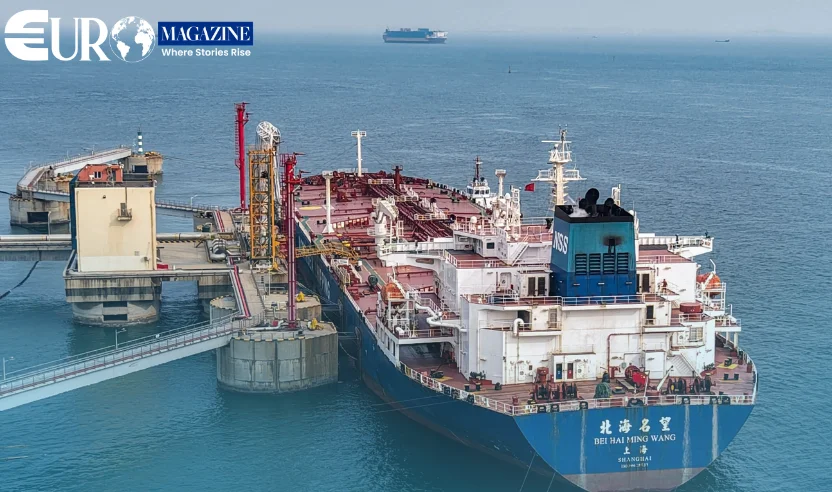
Trade between the United States and China declined sharply, with flows dropping by around 30% and $130 billion in Chinese exports to the US disappearing. However, global supply chains adapted quickly, with Southeast Asian economies such as Vietnam, Thailand, and Malaysia absorbing much of the redirected demand.
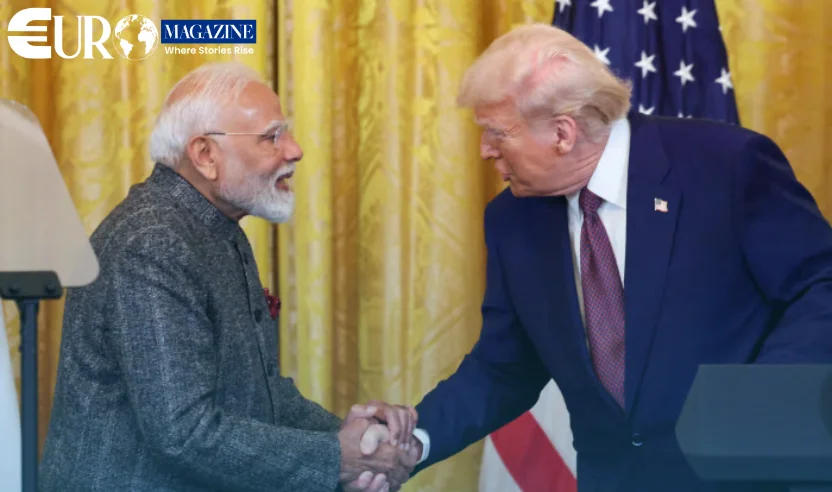
India also gained ground, particularly in smartphone exports, as companies diversified sourcing away from China. Meanwhile, China maintained a record trade surplus by pivoting toward supplying industrial components and capital goods to emerging markets.
While the tariff war reshaped trade routes, the United States continued to run a large trade deficit, highlighting a gap between policy objectives and economic outcomes.
The most significant shift, however, has come from artificial intelligence. AI-related goods—including semiconductors, servers, and data-center equipment—accounted for roughly one-third of global trade growth, with demand surging as major technology firms expand infrastructure investments.
Asian manufacturing hubs, particularly Taiwan and South Korea, played a central role in supplying these goods, reinforcing their importance in the evolving global trade landscape.
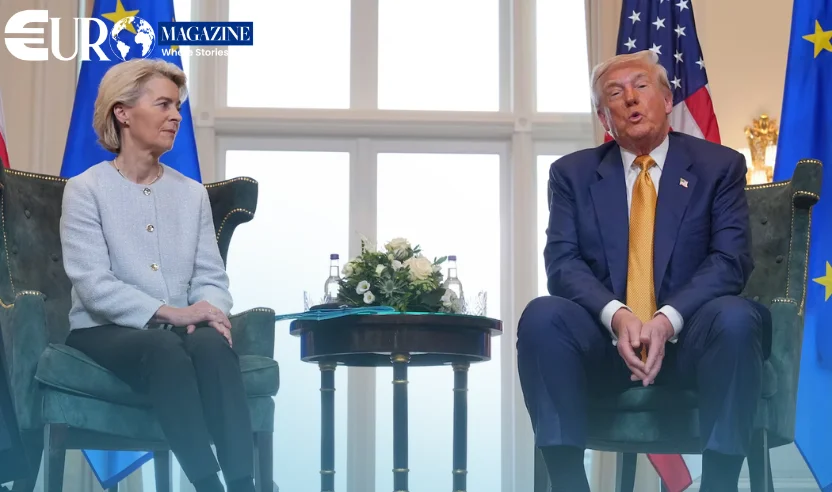
The European Union, meanwhile, faced mounting pressure from both sides. Its trade deficit with China widened while its surplus with the US narrowed, creating what analysts describe as a “double squeeze.” Key sectors such as automotive exports saw sharp declines, while Chinese electric vehicle imports surged into European markets.
In response, the EU has moved to diversify trade partnerships, signing new agreements with India, Mercosur, and Australia in an effort to reduce reliance on traditional trading partners.
The report concludes that while tariffs disrupted established trade flows, the rapid rise of AI-related commerce has become a dominant long-term driver, redefining global trade patterns in the years ahead.